 Back
Back
Making the System Work Harder than the Human
We found a gap in our providers mental models for appointment management and designed a system matching it to reduce fatigue.
The Product
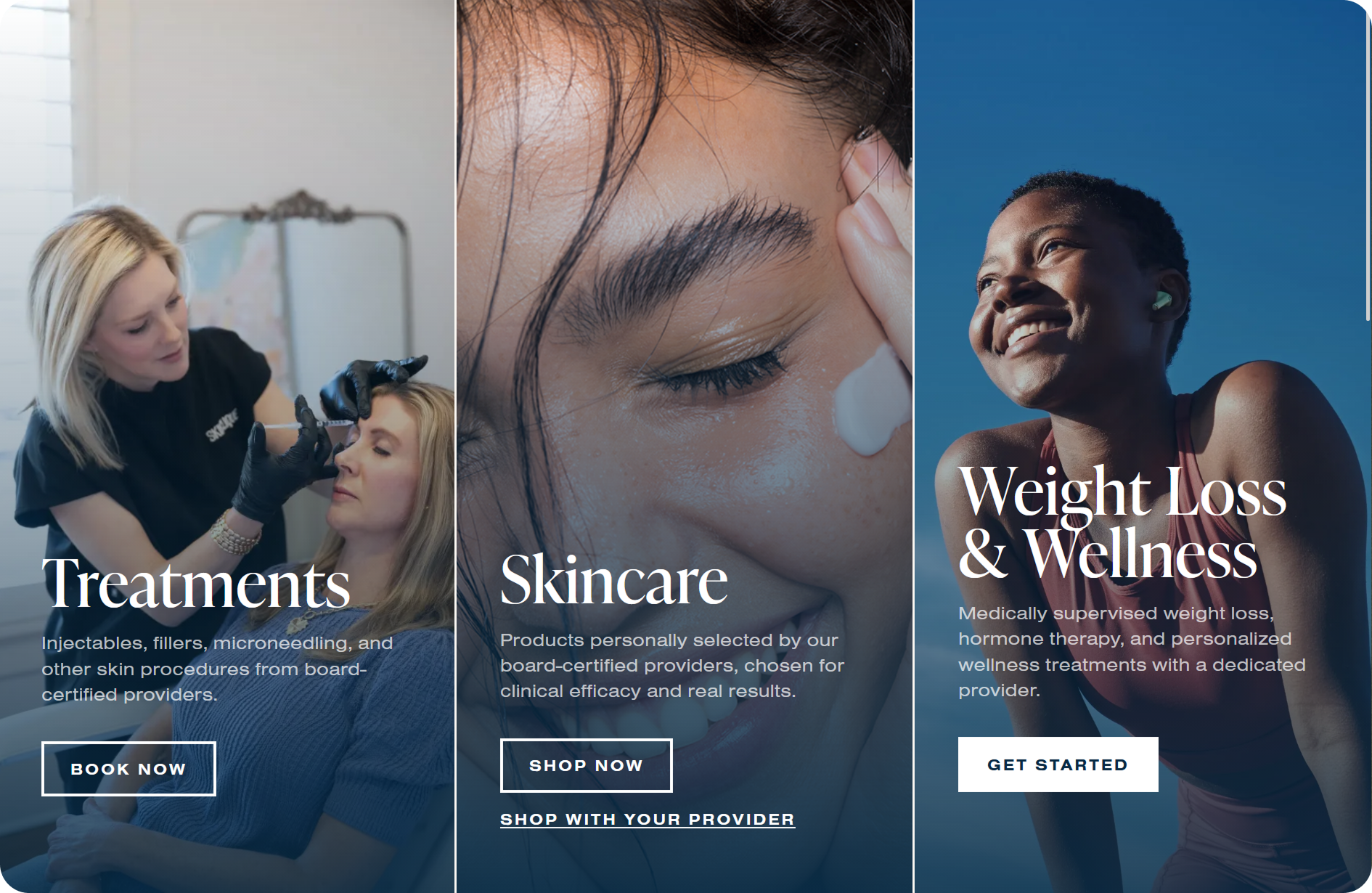
Skin Clique connects patients with board-certified aesthetic providers for treatments like tox, filler, and chemical peels in-home or in-clinic.
We were designing an Electronic Medical Record platform to replace a plethora of tools providers were using to manage their business.
The Problem
In our interviews, providers were complaining about scheduling issues. We heard things like:
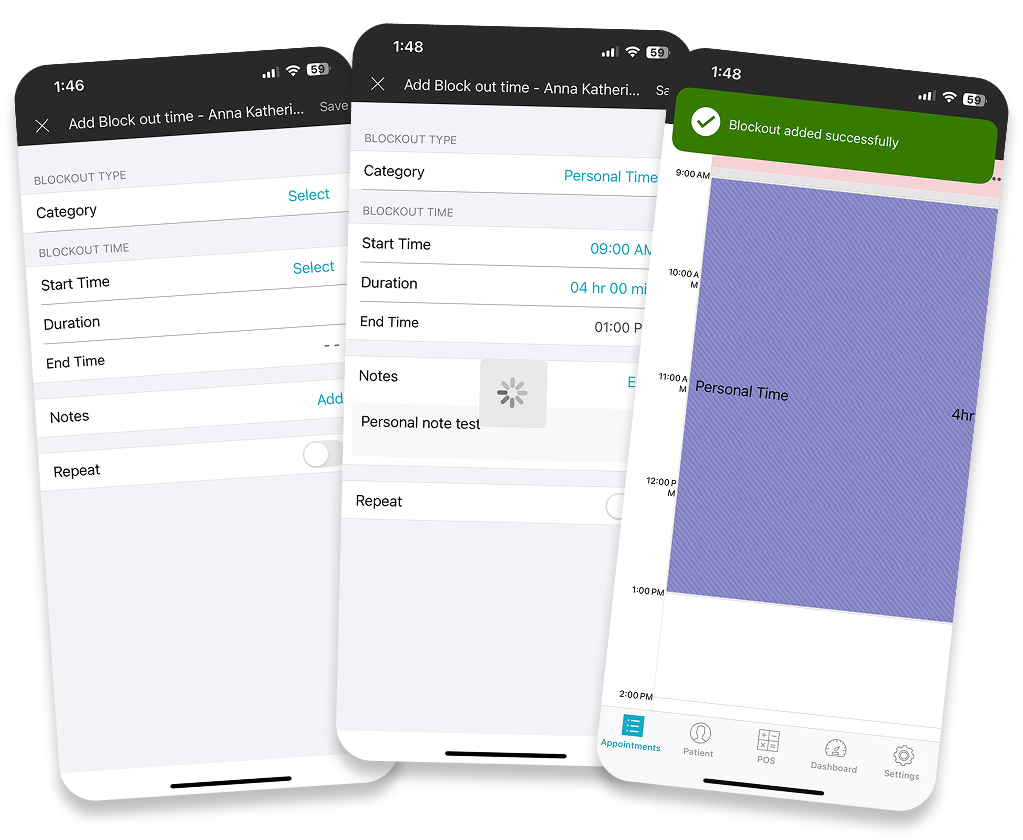
- "I forget to block time off and patients book when I'm not really available."
- "My patients won't book themselves so I just book for them instead through the app."
- "I spend most my time managing my appointments at the end of the day."
- "I was tired of handling it all, so I asked the support team about getting a virtual assistant to do it for me."
Providers were tired of managing their schedule manually.
The Cause
The old app was made for brick and mortar med-spas and had some limitations:
- Working hours was a single and global setting.
- Providers had to set windows daily to block time (like for lunch).
- External calendar syncing from the old app didn't work.
- If a provider only provided a service on a specific day, or at a specific location, the system didn't account for this.
So, providers used manual workarounds to cope with these limitations.
The Hypothesis
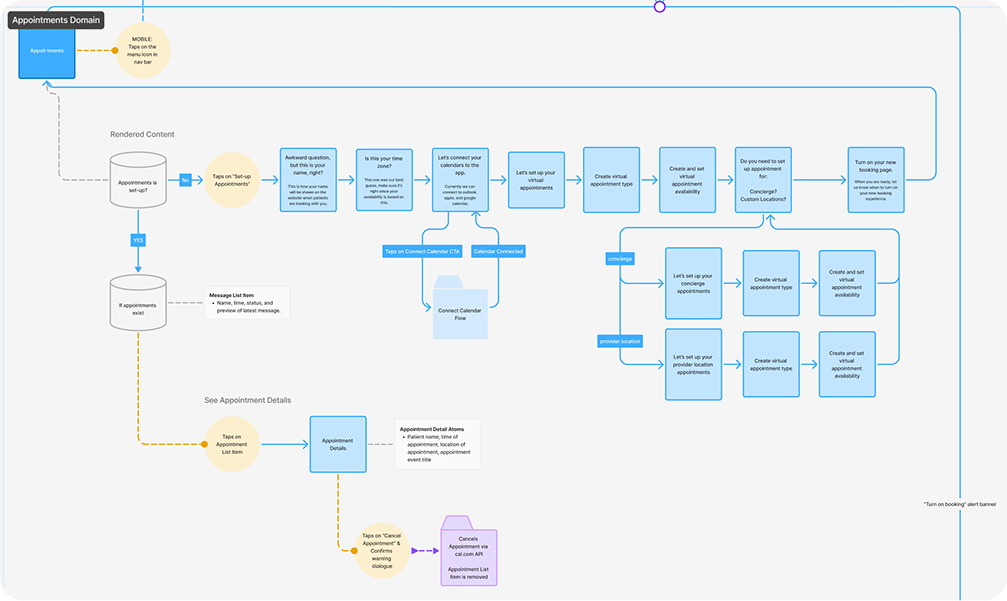
We believed that appointment specific availability would reduce the admin burden.
We also believed that providers and the system disagreed on how an appointment's hierarchy was structured. Providers thought details and rules were per appointment but the current system enforced details and rules applied to all appointments.
This mismatch between the app and the provider's understanding is best explained by a psychology concept called a mental model.
A compressed model based on what we think we know about a system and how it works.
The Solution
By breaking the old system model:
Global Availability > Global Rules > Service Appointment.
To match the mental model of providers:
Location of Service + Services Offered > Availability > Details and Rules
We could dump rules and workarounds onto the system as children of an appointment type. This would result in way less mental space needed for managing calendars.
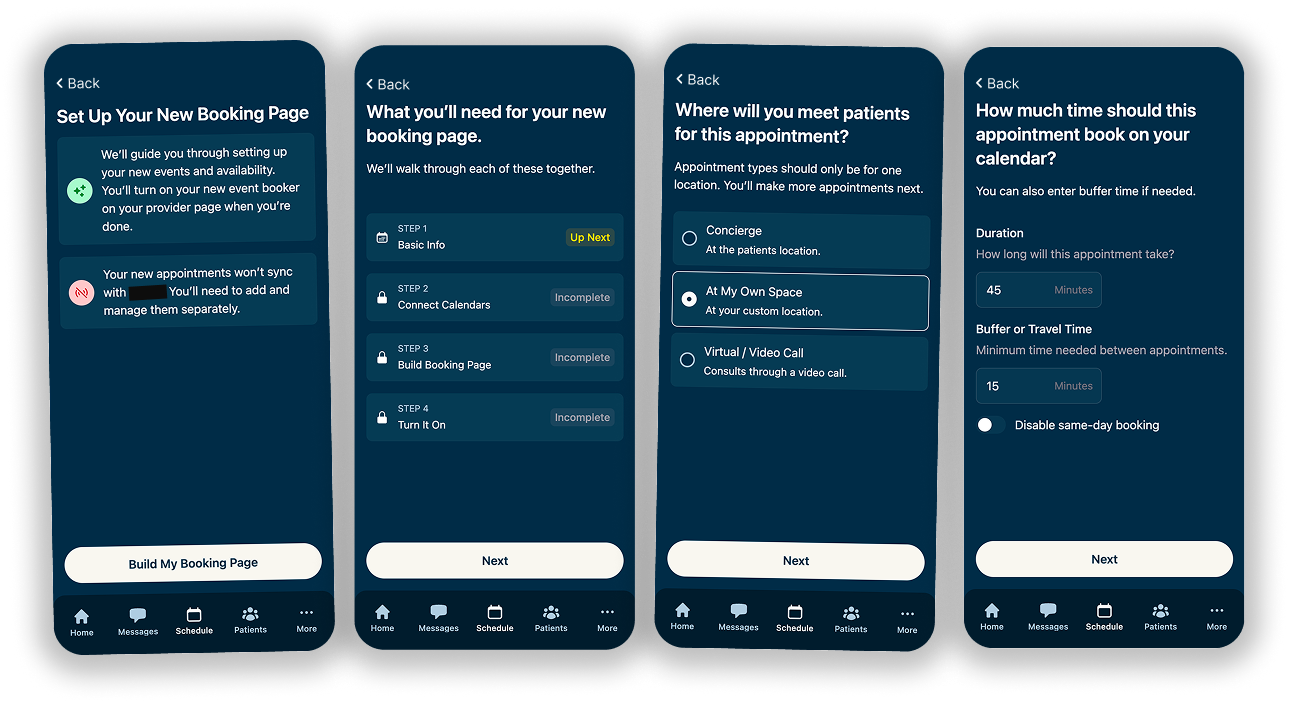
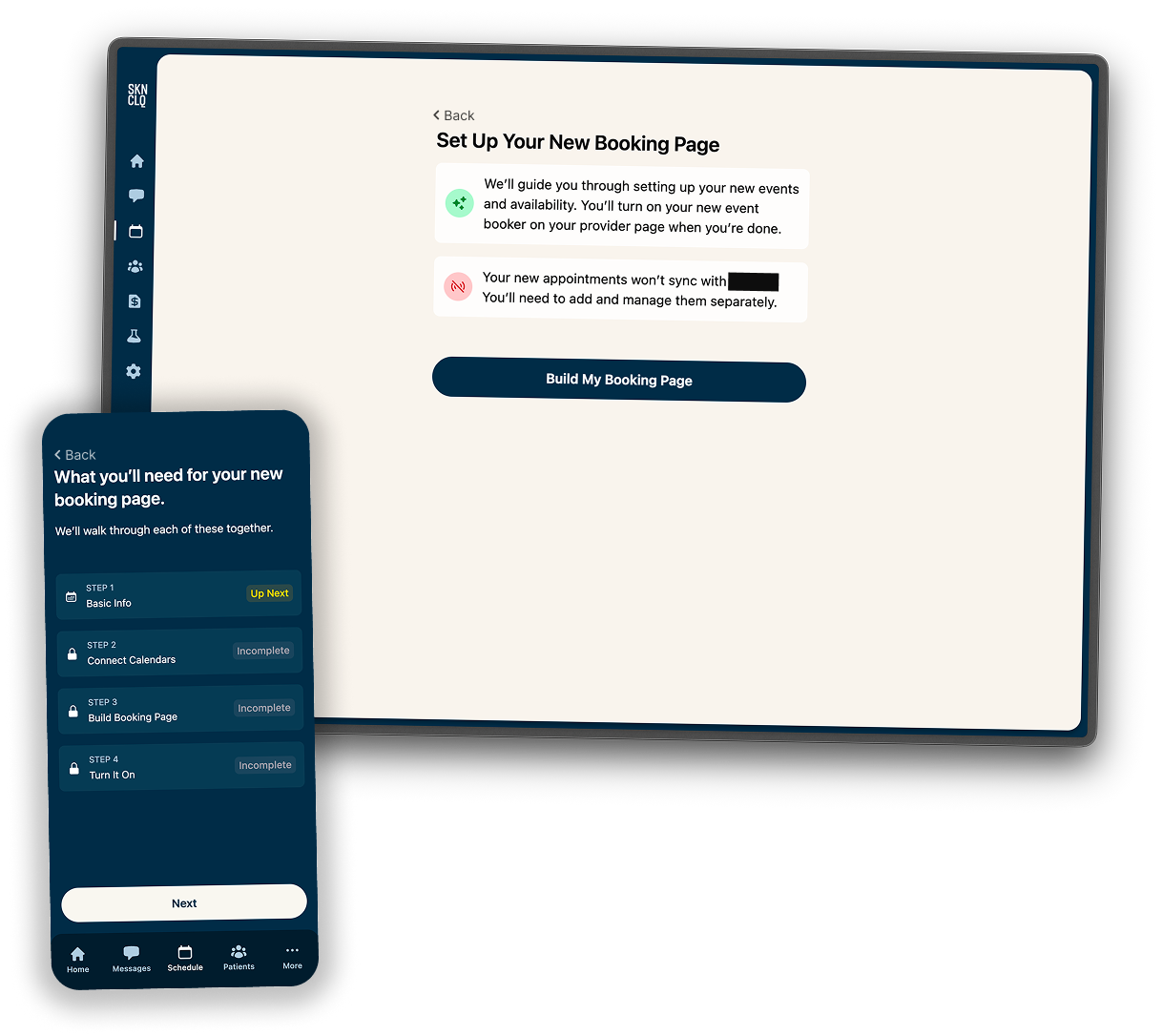
When building the new system, we allowed providers to define their availability at the service level during onboarding instead of having one set of working hours. This meant no more manually blocking time.
Oh, and you can sync your external calendars!
The Results
We watched the providers with the most complex set ups build their schedules out in the onboarding flow with ease.
An added benefit is that now we can surface a providers booking options to patients digitally, the way the provider sees it (service first, location first, or a mix of the two).
This wasn't a flashy fix but beta providers are already getting that time back into their practice, just by onboarding to the new system.

